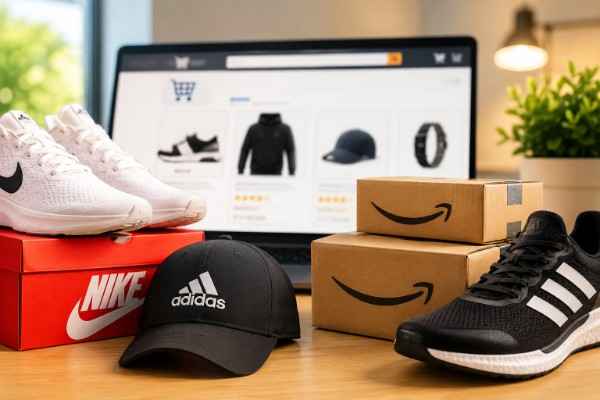
Can You Really Sell Nike, Adidas, and Other Famous Brand Products on Amazon?
Thousands of people enter Amazon selling every year after seeing branded products like Nike shoes, Adidas hoodies, Apple accessories, and Puma sneakers selling in massive quantities.
At first, the business looks simple.
Buy branded products cheaply.
List them on Amazon.
Sell for profit.
But the reality is far more complicated.
Many beginners do not realize that selling products from companies like Nike, Adidas, Apple, LEGO, Samsung, Sony, and other global brands comes with strict Amazon rules, approval systems, invoice checks, and suspension risks.
In 2026, Amazon has become extremely aggressive about protecting customers from counterfeit products and unauthorized sellers.
That is why many people who start selling branded products suddenly face:
Account suspensions
Counterfeit complaints
Invoice verification failures
Listing removals
Frozen payments
Inventory destruction
This guide explains everything in detail so you understand how branded selling on Amazon actually works today.
Why Big Brand Products Sell So Fast on Amazon
There is a reason millions of Amazon sellers want to sell products from major brands.
Companies like Nike and Adidas already have global trust.
Customers already know these brands.
That means sellers do not need to spend huge money educating buyers.
For example, when someone searches “Nike running shoes,” they already trust the product before clicking.
This creates:
Higher conversion rates
Faster sales
More repeat customers
Less marketing effort
Stronger buyer confidence
That is why branded products can generate huge revenue on Amazon.
A single successful Nike listing can sometimes outperform dozens of generic products.
But because the opportunity is so attractive, competition becomes extremely intense.
Is It Legal to Sell Nike or Adidas Products on Amazon?
Yes.
Selling genuine branded products is generally legal in many countries, including the United States and India.
This is commonly supported through resale laws or “first sale doctrine” principles.
In simple words:
If you legally purchase authentic Nike or Adidas products, you can usually resell them.
However, legality alone does not mean Amazon will automatically allow you to sell those products.
Amazon has its own marketplace policies.
And this is where many beginners get confused.
Amazon Does Not Allow Everyone to Sell Every Brand
Amazon wants to protect customers from fake products.
Because of this, many famous brands are “gated.”
A gated brand means sellers need Amazon approval before listing products.
This is extremely common with brands like:
Nike
Adidas
Apple
LEGO
Disney
Samsung
Sony
Hasbro
L'Oréal
Pampers
And many others.
If a brand is gated, Amazon may show a message like:
“You need approval to sell this brand.”
This stops random sellers from flooding Amazon with counterfeit products.
What Is Brand Gating on Amazon?
Brand gating is Amazon’s protection system.
Only approved sellers can list products under certain brands.
Amazon introduced stricter gating after counterfeit complaints increased globally.
Today, many major companies pressure Amazon to restrict unauthorized sellers.
That is why selling famous brands is no longer as easy as it was years ago.
Can Beginners Get Approval to Sell Nike or Adidas?
Sometimes yes.
Sometimes no.
It depends on several factors.
Amazon usually checks:
Your seller history
Supplier invoices
Business information
Account health
Purchase quantity
Product category
Country-specific rules
Some brands are easier to unlock.
Others are extremely difficult.
Nike is considered one of the hardest major brands for new sellers.
In some marketplaces, new accounts may not receive approval at all.
Why Invoices Matter So Much
Invoices are one of the most important parts of branded selling.
Amazon usually wants invoices from legitimate wholesalers or distributors.
Not simple retail receipts.
This is where many beginners fail.
Buying products from a local store and uploading the bill often does not work.
Amazon typically asks for:
Wholesale invoices
Supplier details
Business information
Recent purchase records
Large quantity orders
Verifiable distributors
Many sellers lose accounts because they use fake invoices or unreliable suppliers.
And Amazon has become extremely advanced at detecting suspicious documents.
The Biggest Risk: Counterfeit Complaints
One of the scariest parts of selling branded products is counterfeit complaints.
Even genuine products can sometimes trigger problems.
This surprises many new sellers.
A customer may think the product looks different.
Packaging may vary slightly.
A brand may aggressively target unauthorized sellers.
Or Amazon’s systems may flag unusual activity.
Once counterfeit complaints happen, Amazon may:
Suspend listings
Freeze payments
Request invoices again
Remove inventory
Deactivate the account completely
This is why experienced sellers treat branded products very carefully.
Why Major Brands Prefer Authorized Sellers
Companies like Nike and Adidas care deeply about their brand image.
They want control over:
Pricing
Customer experience
Product quality
Marketplace reputation
Fake product prevention
Because of this, many companies prefer working only with authorized distributors and approved sellers.
Some brands even use dedicated legal teams to monitor Amazon sellers daily.
Authorized Seller vs Unauthorized Seller
This is one of the most important concepts in Amazon selling.
Authorized Seller
An authorized seller has official permission from the brand or distributor.
Benefits often include:
Better pricing
Lower complaint risk
Stronger inventory access
Brand support
More long-term stability
Unauthorized Seller
An unauthorized seller may still legally resell authentic products, but without direct brand permission.
This creates higher risk.
Because brands may aggressively remove these sellers through complaints or Amazon pressure.
How Big Amazon Sellers Source Famous Brands
Large Amazon sellers usually do not buy products randomly.
They source through professional channels such as:
Authorized distributors
Wholesale suppliers
Liquidation deals
Closeout inventory
Retail arbitrage
Online arbitrage
Brand partnerships
However, retail arbitrage has become much harder in 2026 because Amazon now wants stronger supply chain proof.
Retail Arbitrage vs Wholesale
Retail Arbitrage
Retail arbitrage means buying discounted products from stores and reselling them online.
Example:
Buying Nike shoes during clearance sales and flipping them on Amazon.
Advantages
Low starting investment
Easy for beginners
Simple sourcing
Disadvantages
Higher suspension risk
Weak invoice proof
Difficult scaling
Inconsistent inventory
Wholesale
Wholesale means purchasing directly from distributors in bulk quantities.
Advantages
Better long-term scaling
Stronger invoices
More stable inventory
Professional supplier relationships
Disadvantages
Higher investment required
Large inventory risk
Approval challenges
More paperwork
Most serious Amazon sellers eventually move toward wholesale models.
Why Many Beginners Lose Money Selling Big Brands
Social media often makes branded Amazon selling look easy.
But many new sellers lose money quickly because they underestimate the risks.
Common mistakes include:
Using fake suppliers
Ignoring Amazon restrictions
Entering oversaturated listings
Selling without approval
Underestimating fees
Starting price wars
Buying fake inventory accidentally
Ignoring intellectual property rules
Many people lose money before making any serious profit.
Amazon Fees Can Destroy Your Profits
Many beginners only focus on selling price.
But Amazon deducts multiple fees such as:
Referral fees
FBA fees
Storage fees
Advertising costs
Return processing fees
Long-term storage penalties
Fashion categories like shoes and clothing often have high return rates.
This can destroy profit margins very quickly.
A product that looks profitable initially may later produce very little net income.
Competition on Nike and Adidas Listings Is Brutal
Popular branded listings attract huge competition.
You may compete against:
Amazon itself
Large wholesalers
Authorized distributors
Massive inventory sellers
International sellers
Established Amazon businesses
Many of these sellers operate on extremely small profit margins.
New sellers struggle because they cannot compete with large-scale pricing power.
Is Selling Big Brands Still Profitable in 2026?
Yes.
But mostly for experienced sellers.
The people succeeding today usually have:
Reliable suppliers
Strong invoices
Business systems
Large capital
Inventory management
Good account health
Deep Amazon knowledge
The easy money phase is mostly gone.
Branded Amazon selling has become highly professional.
Why Many Sellers Prefer Private Label Instead
Instead of selling Nike or Adidas products, many advanced sellers now create their own brands.
This is called private label.
Advantages include:
Better profit margins
Full pricing control
Long-term brand ownership
Less dependency on approvals
Reduced direct competition
That is why private label continues growing rapidly in 2026.
Can You Start Small Selling Branded Products?
Yes.
Many sellers begin with small inventory tests.
For example:
10 pairs of shoes
20 branded T-shirts
Discounted seasonal products
Outlet inventory
But smart sellers always research first.
They check:
Amazon restrictions
Competition levels
Profit margins
Sales rank
Return rates
Never buy inventory blindly.
How Amazon Detects Fake Products
Amazon now uses advanced systems to fight counterfeits.
They monitor:
Customer complaints
Return behavior
Packaging inconsistencies
Invoice authenticity
Seller patterns
Serial numbers
Brand reports
AI-based fraud detection
This makes fake product selling extremely dangerous in 2026.
Even accidental sourcing mistakes can destroy an account.
Why Genuine Products Can Still Cause Problems
Many beginners think:
“If the product is real, I am safe.”
That is not always true.
Even genuine products can trigger issues because of:
Improper invoices
Unauthorized sourcing
Packaging differences
Customer suspicion
Incorrect listings
Brand complaints
Amazon prioritizes customer trust above everything else.
What Are IP Complaints?
IP means intellectual property.
Brands may file complaints related to:
Trademark violations
Copyright problems
Counterfeit claims
Patent issues
Design protection
Repeated IP complaints can permanently damage an Amazon seller account.
How to Reduce Risk When Selling Major Brands
Selling branded products safely requires discipline.
Buy Only From Trusted Suppliers
Avoid suspiciously cheap inventory.
If prices look unrealistically low, there is usually a problem.
Keep All Invoices Safe
Amazon may ask for invoices months later.
Always maintain organized records.
Avoid Fake Products Completely
One counterfeit complaint can destroy years of business work.
Start With Easier Brands
New sellers should avoid heavily restricted brands initially.
Learn Amazon Policies Properly
Many suspensions happen because sellers never study Amazon rules seriously.
Best Alternatives for Beginners
Instead of immediately targeting Nike or Adidas, beginners often succeed faster with:
Smaller sports brands
Local brands
Generic products
Ungated categories
Emerging companies
These categories usually involve lower risk and easier approvals.
Is Amazon FBA Better for Branded Products?
In many cases, yes.
With Amazon FBA:
Amazon stores products
Ships orders
Handles customer support
Processes returns
FBA listings also usually receive Prime eligibility and better visibility.
However, storage and return costs can still reduce profits significantly.
The Reality Behind “Easy Amazon Money”
Many influencers show:
Huge revenue screenshots
Luxury lifestyles
Massive daily sales
But they rarely show:
Suspensions
Inventory losses
Refund costs
Account bans
Dead stock
Advertising failures
Branded Amazon selling is a serious business model.
Not a shortcut to instant wealth.
Should You Sell Nike and Adidas Products on Amazon?
It depends on your experience, budget, and risk tolerance.
Good Choice If
You understand Amazon policies
You have strong supplier access
You can handle invoices properly
You have decent starting capital
You want long-term scaling
Bad Choice If
You want fast easy money
You use random suppliers
You do not understand Amazon restrictions
You cannot handle suspension risks
You have very low capital
For most beginners, starting with simpler categories is usually safer.
Final Verdict
Yes, you can sell Nike, Adidas, and other famous brand products on Amazon.
But the business is far more difficult than most beginners expect.
Success requires:
Proper sourcing
Strong invoices
Policy knowledge
Risk management
Supplier verification
Account protection
The sellers making long-term profit in 2026 operate like professional businesses — not casual side hustles.
And that is the biggest difference between successful Amazon sellers and people who get suspended after a few sales.
Conclusion
Selling branded products on Amazon can still be highly profitable in 2026.
But Amazon has become stricter.
Brands have become more aggressive.
Competition has become far more professional.
If you want long-term success, focus on:
Learning Amazon systems deeply
Building reliable supplier relationships
Understanding restrictions before investing
Protecting your seller account at all costs
Because on Amazon, losing your account can sometimes cost far more than losing inventory itself.